A Lifelong Advocate for Opportunity
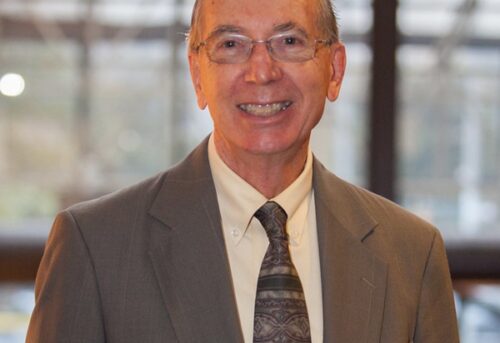
As President and CEO of the American Association of Community Colleges (AACC) from 1991 to 2000, Dr. David Pierce was known for leading AACC through financial challenges into restructuring and expanding into the international arena.
At the time of his death, he had been enjoying retirement from his home in Normal, Illinois, and traveling with his wife Maureen. He recently attended his “Golden Graduate” reunion at California State University at Long Beach, where he earned his baccalaureate and master’s degrees in mathematics and education before receiving a Ph.D. from Purdue University. But over the years, one area of his life hadn’t changed: his unwavering support of Phi Theta Kappa.
Pierce became the second AACC leader to serve on the Society’s Board of Directors (following Dr. Dale Parnell), serving from 1992 to 2003 and as Vice Chair from 2001 to 2003. During his tenure he led the participation of community college presidents in the Society’s first capital campaign to raise funds for construction Phi Theta Kappa’s permanent Headquarters.
Pierce is also credited with beginning the tradition of recognizing the All-USA Community College Academic Team during Phi Theta Kappa’s annual President’s Breakfast at the AACC convention and assisting with the development of the Centennial Scholars program (today the New Century Scholars program), which honors the top community college student in each state. In gratitude for his service, he was named an International Honorary Member of Phi Theta Kappa in 2001.
While earning an associate degree at Fullerton College in California as a veteran of the Korean War, Pierce said he was working three jobs at the time and wasn’t aware of Phi Theta Kappa. However, that awareness grew as he became first a professor and then an administrator working in community colleges.
“I was proud to be a board member, especially after I realized what kind of organization it was. I wanted to contribute in any way I could.”
Over the years Pierce continued to support Phi Theta Kappa financially — from scholarships to programs — whatever the need was at the time.
“So many things were going on, and they were all good,” he said. “They just kept rolling them out, and you wanted to be part of all of it.”
Dr. and Mrs. Pierce are also members of the Foundation’s Athena Society, as they have included Phi Theta Kappa in their estate planning.
“Our feelings about Phi Theta Kappa are very positive and very strong,” he said. “We admire all of its programs and the role it plays in community colleges and elsewhere — the contributions to improving students’ lives. We wanted to express that through our estate planning.”
Pierce also believed Phi Theta Kappa is playing a very important role in the college completion initiative.
“There have been attempts made to improve completion along the way, but this is the first really well-organized effort,” he said. “It’s a tremendously important initiative, but still only one of many impressive initiatives Phi Theta Kappa has led.
“I think Phi Theta Kappa provides motivation and recognition for students who historically didn’t benefit from those advantages. It’s our standard-bearer for community colleges — making opportunities available that weren’t previously there.
“Phi Theta Kappa adds frosting on the cake for those who are eligible to participate. For those students it’s really something — a life-changing opportunity and experience.”